
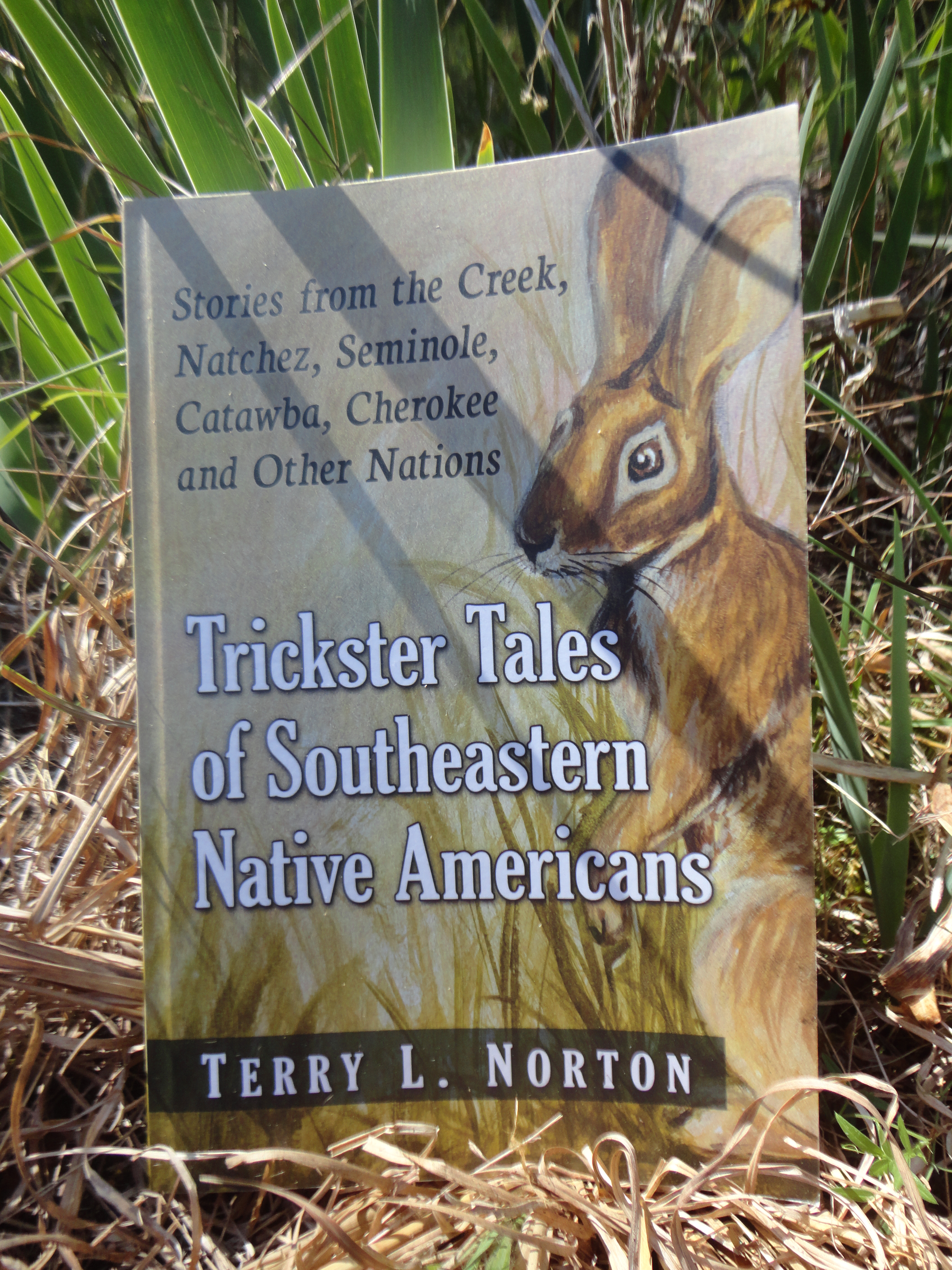
Halloween is tomorrow so what better time to share this collection of stories from the Creek, Natchez, Seminole, Cherokee and other Nations (including the Catawba who still live just down the road from me), each one filled with the hijinks, cunning, and pranks from when animals could talk and take on different shapes.
Norton, a professor emeritus from Winthrop University, spent years researching the history and oral traditions of storytelling, and the stories passed down not only from our own Indigenous Peoples, but of cultures around the world. In telling and retelling the same stories through generations and various translations, the gist and soul of the tale remains intact while some details and embellishments add to it.
This collection opens with an Introduction to the Trickster, a brief essay on the traits and character types of tricksters throughout the folk literature of the world. It’s a unique insight into the role these characters play, “…to be a trickster is to be a rogue who acts outside conventional norms. … the dark side of all of us, freed from the social and personal rules that direct our normal behavior [Lankford]. Little surprise then he is often a wandering outcast who is frequently banned from settled habitations, lives on the fringes, or dwells far from them yet enters to disrupt them.” Sometimes that disruption brings about a benefit, as when Rabbit steals fire so other beings can use it.
The body of the book is the stories themselves, arranged by the tribes included. Rabbit is a dominant character because he appears as a premier trickster in many of the stories from across the Southeast. He often uses his wits to overcome bigger, stronger adversaries, and to get what he wants, but that doesn’t always save him from being tricked himself. We also meet Terrapin, Wildcat, Wolf, Possum and others. The reader finds out why Possum has a hairless tail, why Turkey has dark feathers on his neck, how Rabbit got his split lip, and more.
Some of the stories are humorous, some are dark. (These are not Aesop’s Tales we grew up with.) Norton doesn’t sugarcoat or shy away from the original language of these tales, but he’s also conscious of being respectful not only of them, but also the cultures they come from. He closes his book with four appendixes on topics such as ‘Sovereignty and Appropriation’ that address some of the concerns writers and storytellers face today in telling their stories. Who has the right to tell a particular story?
I’ve always enjoyed myths and legends so Trickster Tales of Southeaster Native Americans fit right in. In some cases, the same tale was told by different groups, and it was interesting seeing how each adapted the story.
You can find Terry’s book at McFarland Press or on Amazon.
 A Writer's Window