

Lent begins this week, Valentine’s Day being Ash Wednesday! A rather odd confluence of emotions for the two celebrations–candy, flowers, and hearts a-flutter for one, and fasting, abstinence from meat, and the start of a season of repentance for the other. While I don’t intend, and it’s not expected of us, to walk around in sackcloth and mope for the next six weeks, I will be mindful of the season.
One of the Lenten devotions I find most meaningful is the Stations of the Cross, a prayerful remembrance of Jesus’ walk to Calvary, made up of fourteen stops, or ‘stations.’ Each station depicts a specific moment along Jesus’ journey. Traditionally, a Catholic church (and some Protestant) has paintings, carvings, or sculptures, etc. of the fourteen stations mounted on the walls around the church. During Lent, a priest, deacon, or lay person processes from one station to the next, stopping for a few minutes at each to lead the congregation in meditation, scripture, and hymn. The devotion done this way takes maybe 30 minutes. Over the years, I’ve seen and prayed various versions of the same fourteen stations.
When I was a kid, I loved the haunting melody of the hymn, At the Cross Her Station Keeping (Stabet Mater), a three-lined verse sung at each station. I may not have understood all the words at the time, but I got the gist of Mother Mary’s sorrow. We weren’t merely responding to prayers, but through those responses sort of became members of the crowd along the Via Dolorosa. But not entirely.
My current parish has a strong Hispanic community, and on Good Friday members of the community reenact the last day of Jesus, from his trial with Pilate to his crucifixion. In full costume they begin at the parish school, process around the grounds, through our woods, ending in a field beyond the playground. One of the younger, stronger men is Jesus, bearing a large wooden cross as the rest of us follow behind. Once in the field, his arms and legs are bound to the cross and it’s set in a hole and raised. The young man’s body strains against the ropes as the cross teeters until it finally settles.
The first time I walked with the crowd I was surprised and somewhat dismayed by all the arms in the air holding phones, taking photos. Wasn’t this supposed to be a prayerful meditation? But then realized if the actual crucifixion took place today, that’s what would happen. We’d be there, but not entirely.
Growing up, our family often made the trek from our small town to my aunt and cousins’ small town. If it was a Sunday, we’d stop for an outdoor mass at The Sorrowful Mother Shrine. A couple years before my dad died, I drove us up there again. We didn’t attend mass, but I pushed his wheelchair around a winding garden path to meditate on the Stations of the Cross.
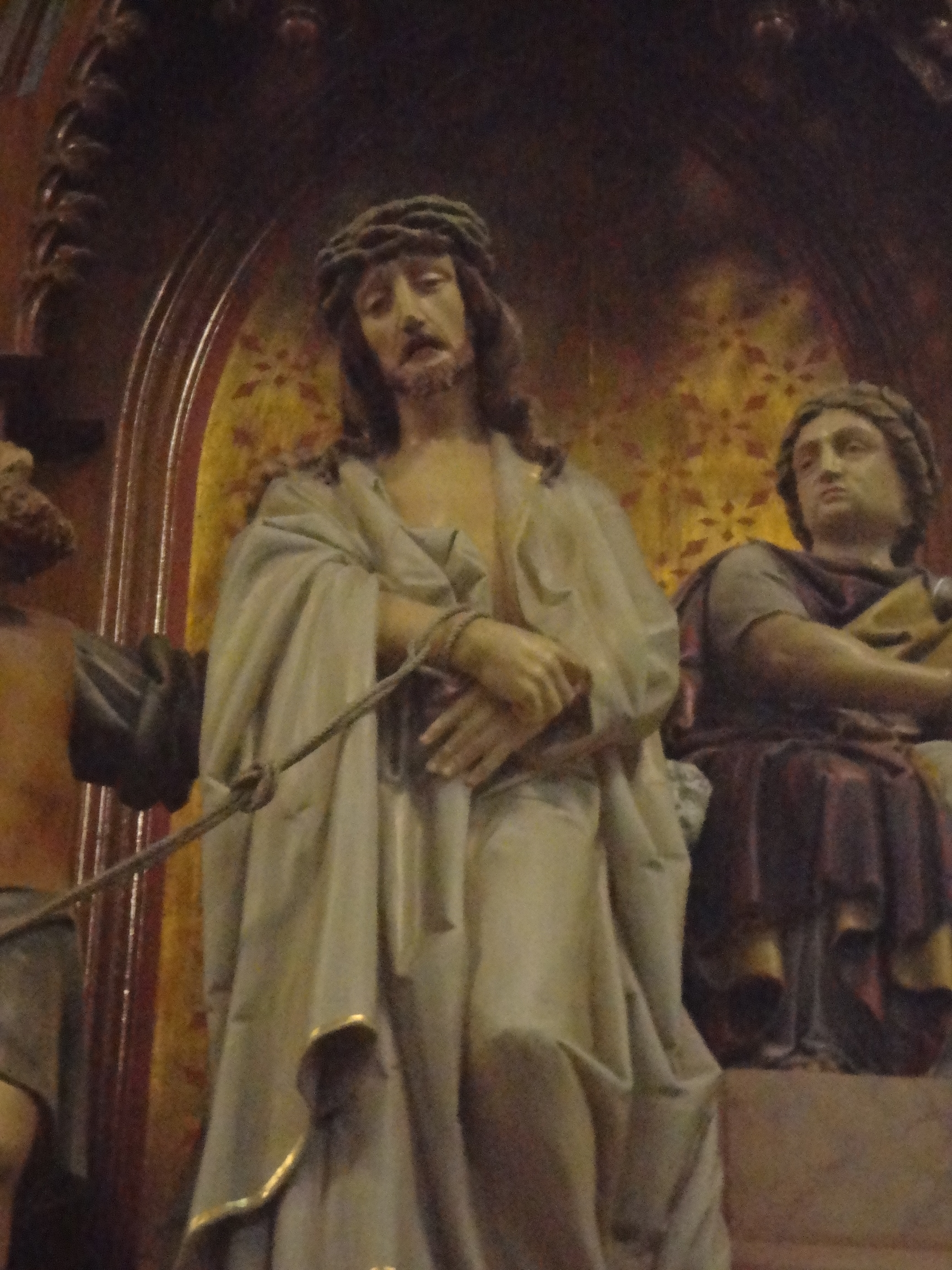
In the Cathedral of St. John the Baptist in Savannah, Georgia, the Stations are three-dimensional wood carvings. Last month my friends Jan and Dawn, and I spent a bit of time in the cathedral. A docent explained how each Station was carved from a single block of wood; the blocks, I believe, came from the same tree. One artist was chosen to carve the figure of Jesus in all the scenes so his facial features would be consistent.
Each artistic rendering of the Stations of the Cross varies in the degree of detail, from simply no color, like the bronze casts in The Grotto of Portland, Oregon, to the rather bloody details in the paintings hanging in my local church. Personally, I’m in the ‘less is more’ camp when it comes to full-color artwork of this subject.
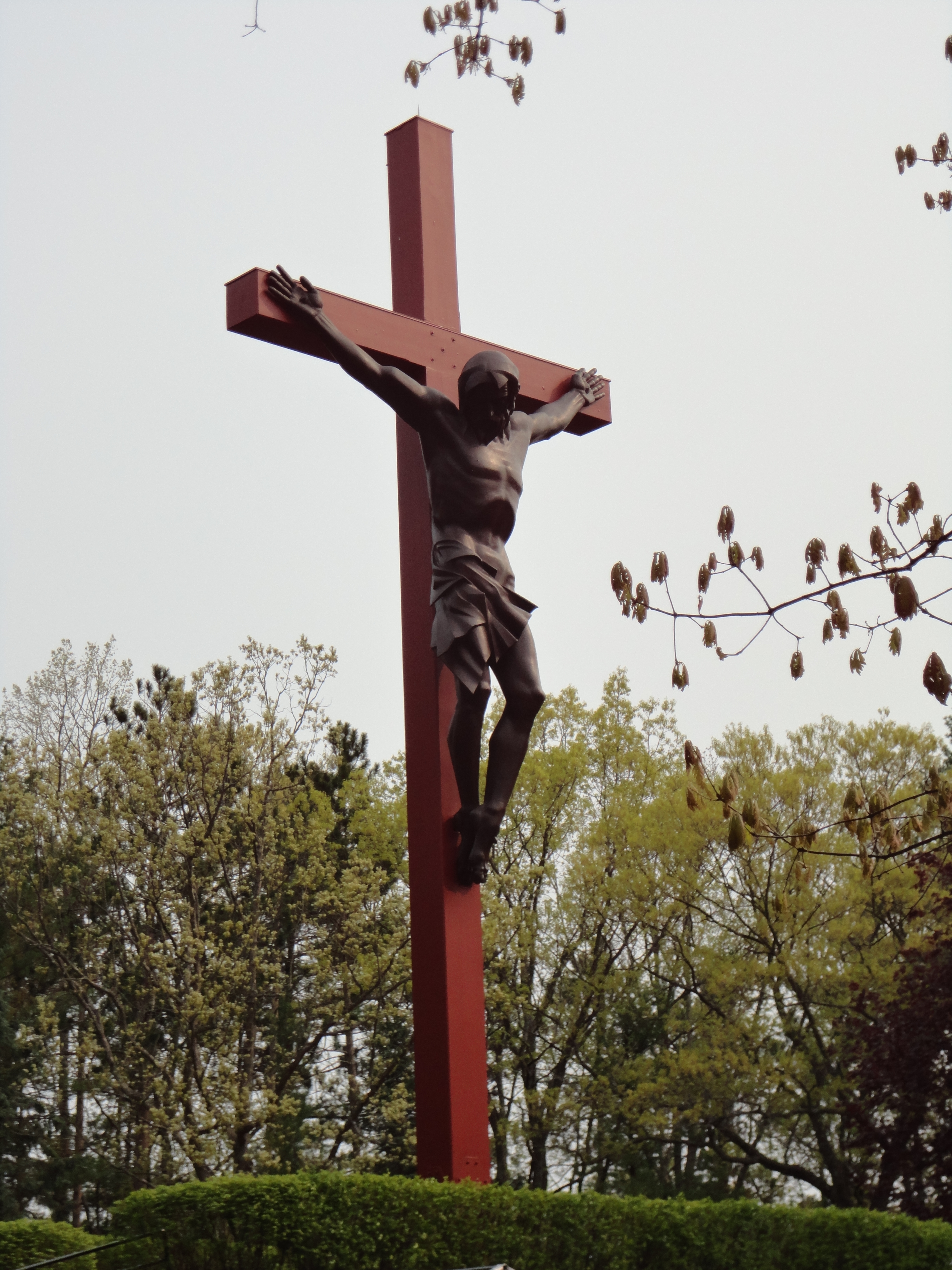
Last May, my shoes took me to The National Shrine of the Cross in the Woods, home of the second largest crucifix in the world. The shrine is located in Indian River, Michigan and the acreage abuts Burt Lake State Park, so it’s surrounded by trees and feels like it’s in the middle of nowhere. The outdoor Stations end at a man-made, knoll that’s 75 feet wide, stretches for 150 feet and is 15 feet high. The crucifix rises another 55 feet. Christ’s body is 28 feet from head to toe, and the outstretched arm span is 21 feet.

I approached the crucifix from the front first, simply in awe and taken in by the size. I walked the Stations and came to the knoll and cross from a different angle. No matter which direction I came from, I was spellbound by Jesus’ face. There’s no agony or sorrow. I kept telling Hubby there’s this strong sense of benevolence, as if this bronze image is truly seeing and loving the person standing at the foot.
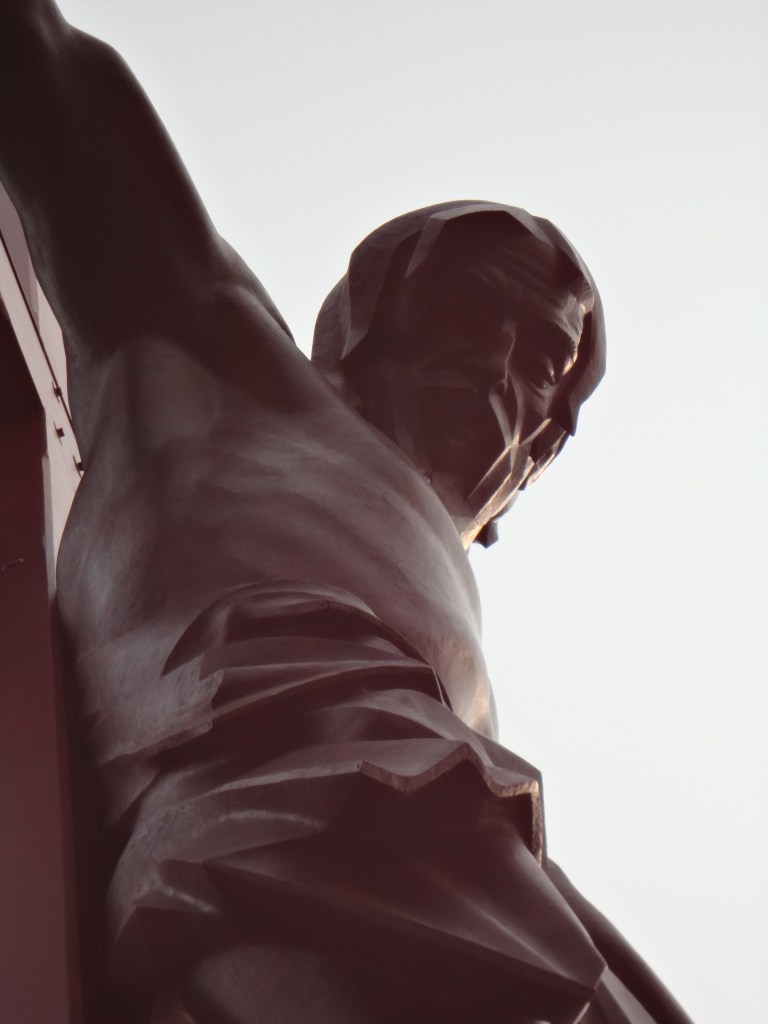
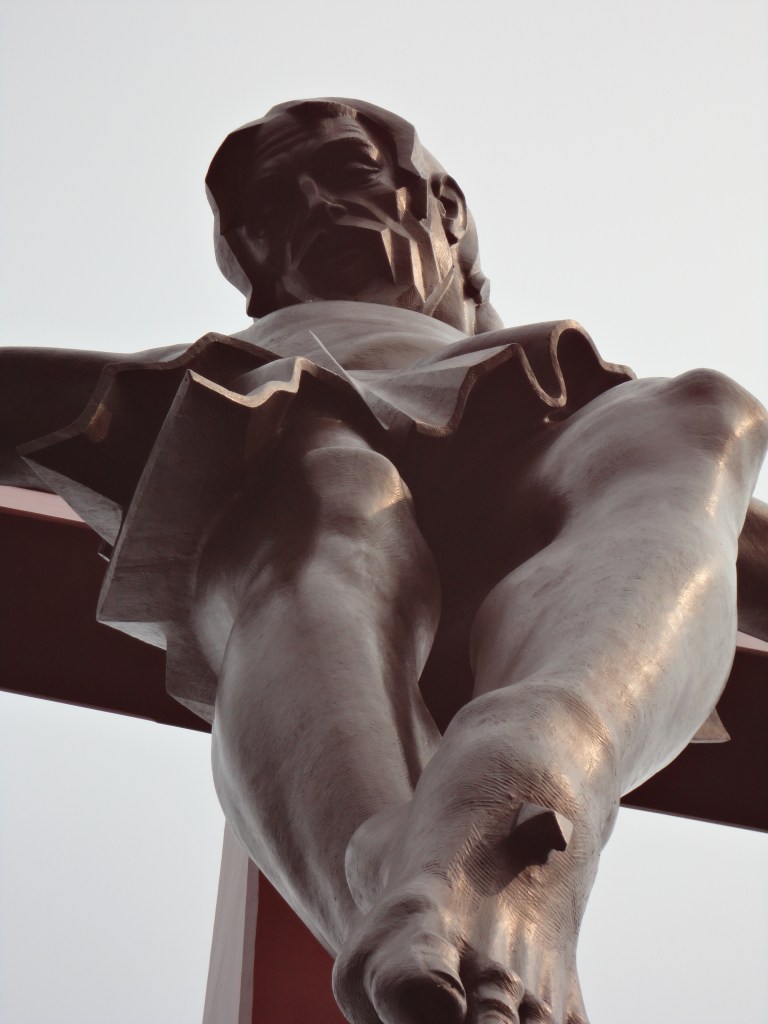
It wasn’t until I was back in the car reading the book about it (I always have to buy the book), that I read sculptor, Marshall Fredericks, had papal permission to omit the crown of thorns and the wound in Jesus’ side. (I’d completely missed those details.) He wanted to depict the moment Jesus commends himself to the Father. It was his dream to “give the face an expression of great peace and strength and offer encouragement to everyone who viewed the Cross.”
As a teenager, I came to believe Jesus’ walk is also an example of my own daily walk to grace. I will stumble, be humiliated and vulnerable. I will be humbled and have to sacrifice. I will also be given moments to extend comfort, forgiveness, and love even when it’s hard to do.
How fitting then that the season of divine love begins with Valentine’s Day. Wishing you all a Happy Valentine’s Day, and if you journey into Lent, may it be fruitful. I hope you have a wonderful week–see you next Monday!
 A Writer's Window