
I know. Probably not the book you were expecting, and technically not a book. But after last fall’s visit to The Land of Oz in the mountains of North Carolina, I was more curious about the original story. I’d never read it – a lapse in my early elementary education for sure. I felt the need to fill in that gap, and also for another reason.
This copy includes the original artwork by illustrator W.W. Denslow. The chosen illustrator proved interesting with the second reason I decided to travel down the yellow brick road. As with many cases, I enjoyed the book more than the movie, even though I still like the movie.
In last week’s post I included part of Baum’s introduction,
“…for the time has come for a series of newer ‘wonder tales’ in which the stereotyped genie, dwarf and fairy are eliminated, together with all the horrible and blood-curdling incidents devised by their authors to point a fearsome moral to each tale. Modern education includes morality; therefore, the modern child seeks only entertainment in its wonder tales and gladly dispenses with all disagreeable incidents.
This is the rest of his intro: Having this thought in mind, the story of The Wonderful Wizard of Oz was written solely to please children of today. It aspires to being a modernized fairy tale, in which the wonderment and joy are retained and the heartaches and nightmares are left out.
While I read, I could picture Baum sitting in a chair spinning the chronicle of Dorothy and her travels for his three youngest sons, aged 9, 11, and 14 when the book was published in 1900. Each evening stopping at a point where they’d beg for more, just like my Grands did when their mom recently read them Charlotte’s Web. The Wizard of Oz is a short story, not a novel, coming in at only 165 pages in this edition, but richer than the movie depicts.
The flying monkeys have always been some of the scariest characters in the movie; in the book they’re some of the most sympathetic and helpful. So are the field mice, who don’t make an appearance at all in the movie; neither does the stork.
Most folks know the ruby slippers in the movie are actually silver shoes in the book–which also ties in with my second reason for reading it. In the movie, the melting of the Wicked Witch of the West is the climax; in the book, while ‘the liquidation’ is a step in getting Dorothy home, the adventures continue even after returning to the Wizard. Getting back to Kansas isn’t as easy as Dorothy tapping her heels 1-2-3. At least not right away. I can picture myself, like Baum, reading The Wizard of Oz to my Grands and their asking, “What happens next?!”
But maybe it’s not just for children. Almost twenty-five years ago, I was given the Summer 1999 issue of Small Farmer’s Journal. One of the articles, The Wizard of Us: The Underground History of Oz by David Giampetroni, lays out how The Wizard of Oz is actually a commentary on the political environment at the turn of the century, and the ramifications for today. I imagine some of you knew–but I’d never heard.
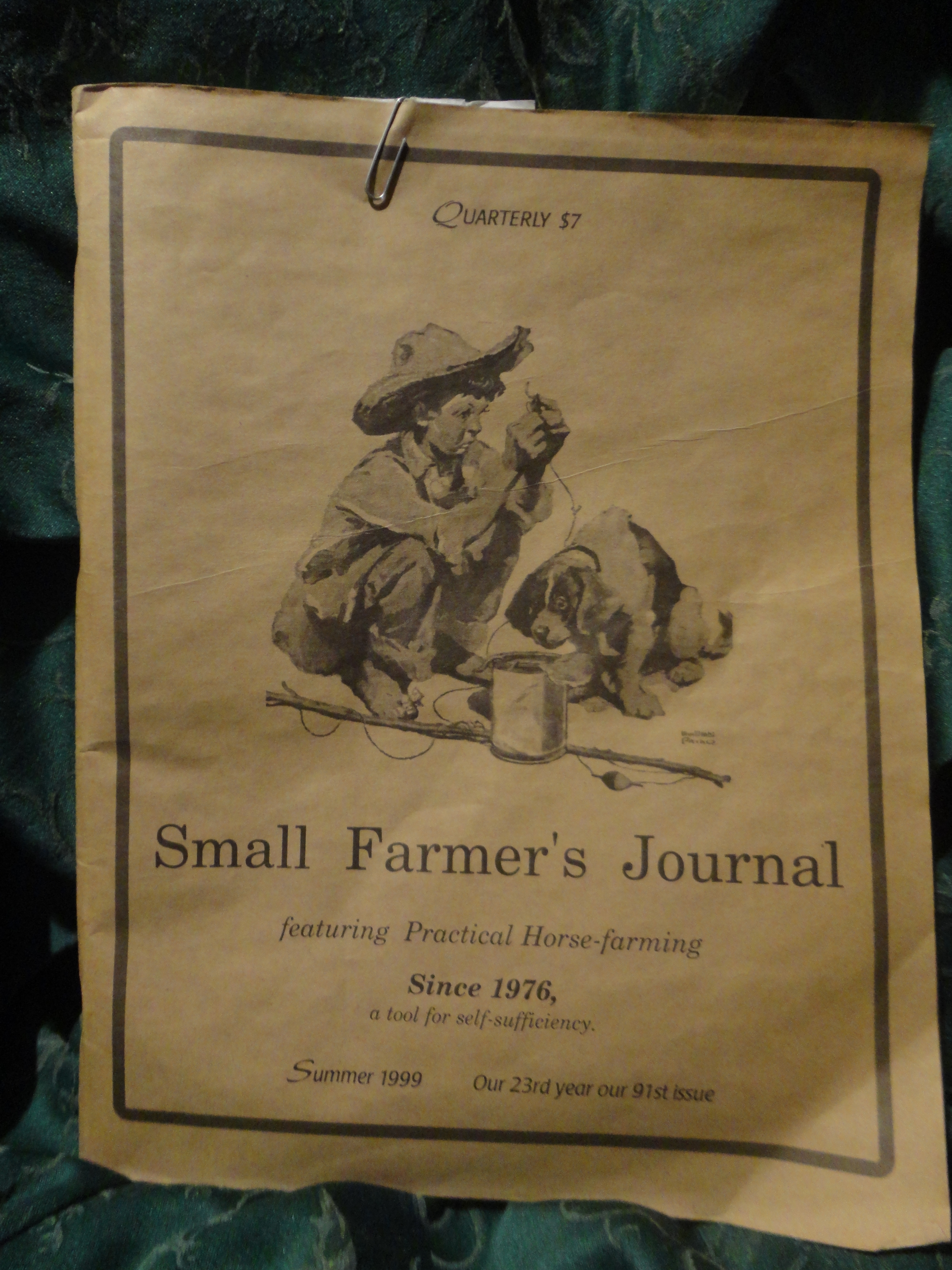
Back in 1964 a high school history teacher began teaching the story as an allegory of the populist movement, and the mass political uprising of American farmers and industrial laborers that first stirred in the aftermath of the Civil War, climaxing in the presidential election of 1896 between William McKinley and William Jennings Bryant. Each character, setting, and event in the book represents a piece of that American history. The cyclone itself symbolizes the turmoil of those various elements swirling together.
Innocent Dorothy is the embodiment of the American ideal and hope of democracy; the yellow brick road is the gold’s side of the debate on whether to keep the gold standard, or switch to a combination gold-silver standard–hence the silver shoes. The dark forests are reminders of the depression America had just come through; the poppy fields a warning of the ‘deadly’ effects of renewed prosperity. The Emerald City is Washington, DC, the Wizard the presidency. And there’s so much more! Adding to this theory, W.W. Denslow was a political cartoonist and illustrator for a Chicago newspaper when Baum asked him to create the drawings for his book.
Giampetroni’s article went into great detail, exploring various deepening layers of Baum’s simple children’s wonder tale, including predictions about the health and reality of attaining real democracy. Giampetroni’s insights were eye-opening, thought-provoking, and sometimes unsettling, especially as another election year is upon us. Maybe Baum included a moral after all? I couldn’t find a link to this article, but other essays have been written on the political analysis of Baum’s work.
Have you read The Wizard of Oz? Did you think it was simply a father’s bedtime story for his three young sons?
Wishing you a week of good reading to whatever lands it takes you. See you next Monday!
 A Writer's Window