
Yesterday I had the real joy of celebrating dear friend and mentor, Joseph Bathanti, as he and four other North Carolina writers were inducted into the North Carolina Literary Hall of Fame.
With Hurricane Helene’s visit last week, I wasn’t sure if the ceremony would be held, (I kept looking for the email telling me it was cancelled), or if all the Inductees could make it. But the ceremony went on as planned beneath a large white event tent and beautiful Carolina skies. All four living Inductees were present, surrounded by family and friends.
The 2024 North Carolina Literary Hall of Fame Inductees are Joseph Bathanti, Anna Julia Cooper (posthumously), Kaye Gibbons, Lenard Moore, and Ron Rash.

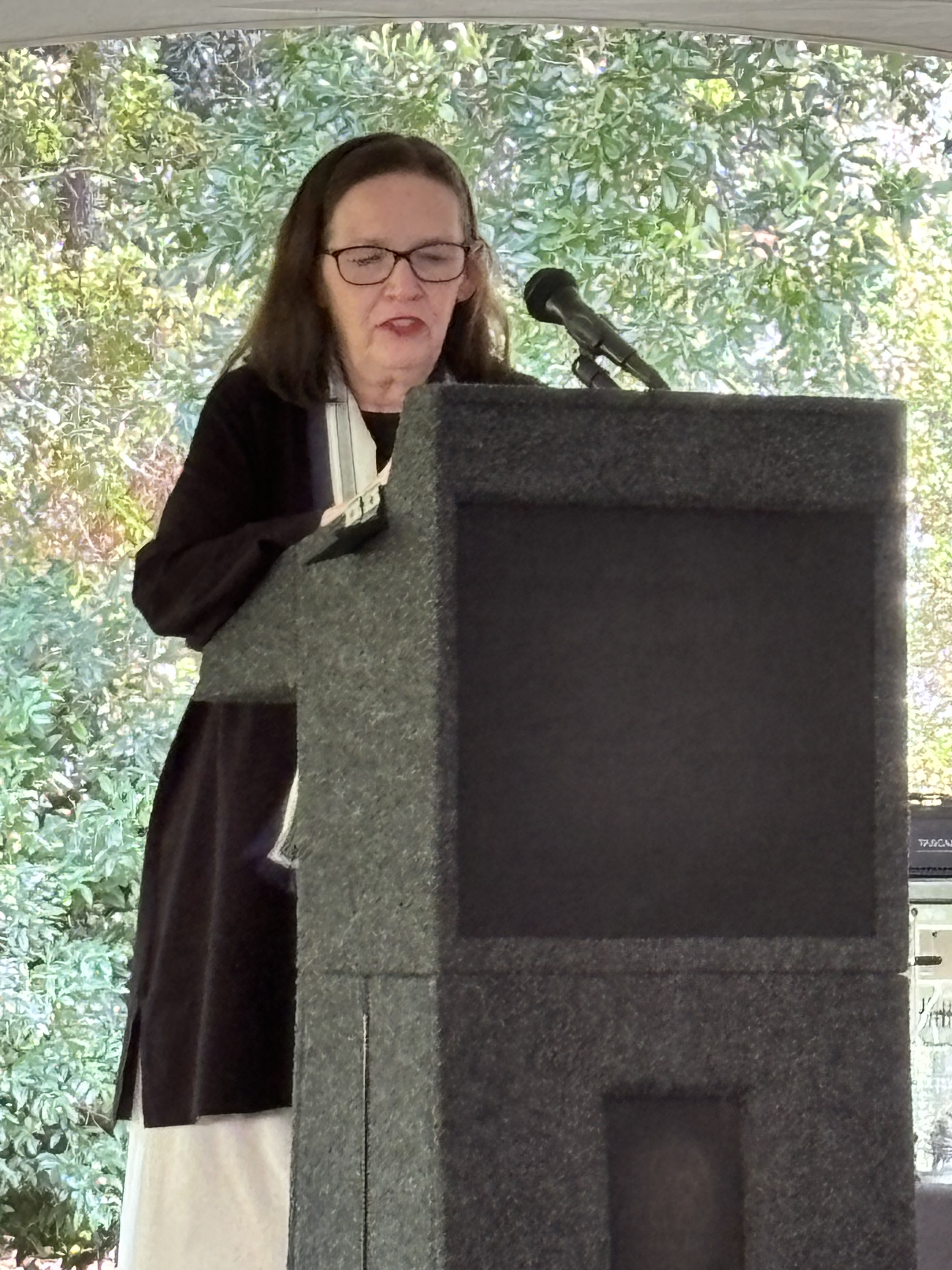

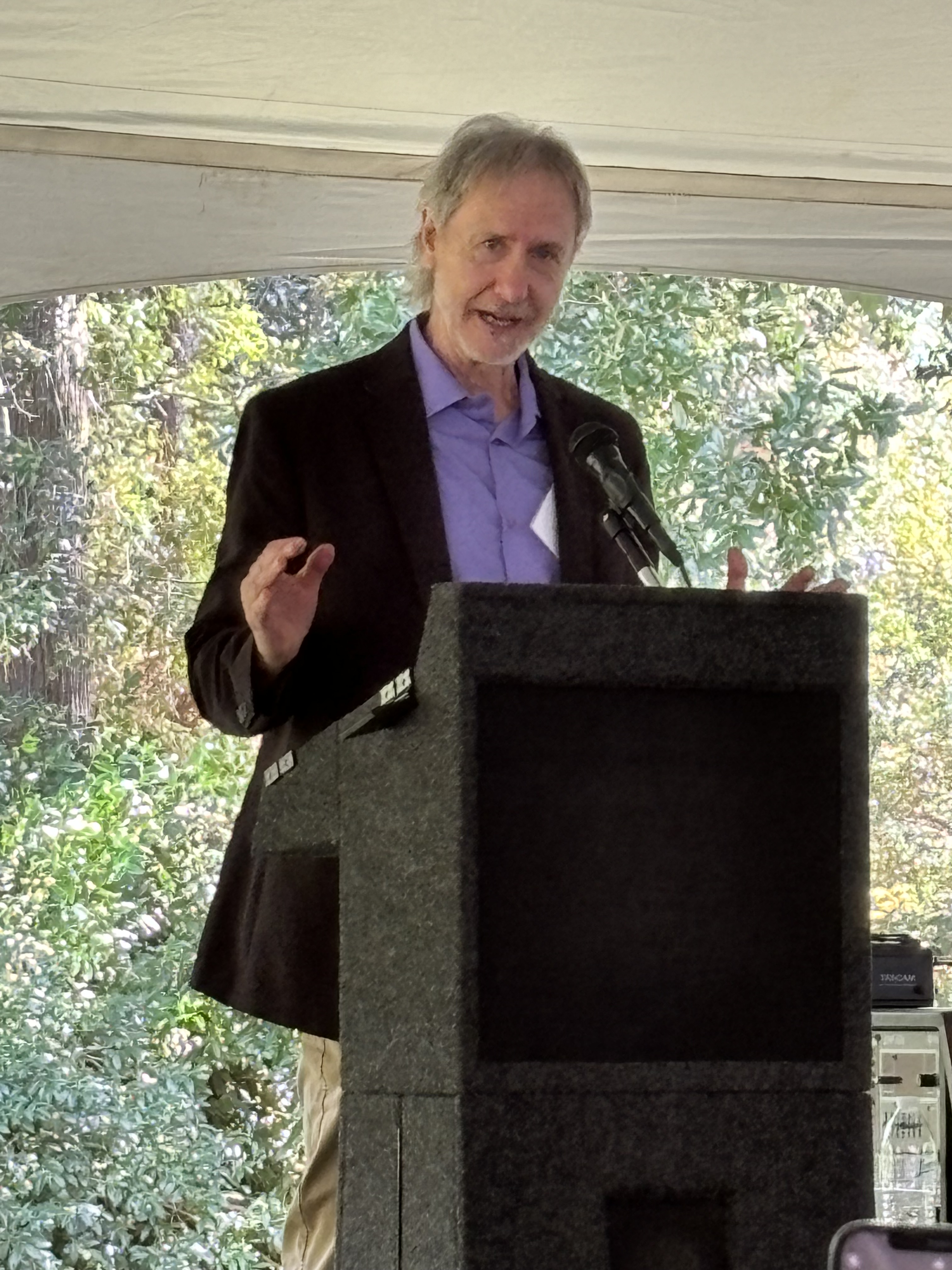
Each Inductee was introduced by a member of their family, or a close writer friend or colleague, and an excerpt of their work read. While each NC author has their own unique literary voice, the thrum and resilience of Appalachia unites them. Even Joseph’s son noted that while his dad’s roots are in Pennsylvania, that state is also part of Appalachia and he’s well at home in North Carolina.
My Poet Sister, Dee, (who was also there) and I have read much of Joseph’s work and some of Gibbons’ and Rash’s, but neither of us knew of Anna Julia Cooper or Lenard Moore. Cooper was born into slavery in 1858, the child of her enslaved mother and presumably her mother’s white owner. Her biography reads of grit and determination, including earning her PhD from the Sorbonne in France, becoming only the fourth Black woman in America to earn a PhD. Her book, A Voice from the South by a Black Woman of the South, is considered a classic on Black feminism, race, and the fight for freedom.
Moore is heralded as a premier writer of haiku and a master of other poetic forms and literary genres. In addition to being widely published, Moore is the founder of the Carolina African American Writers Collective. His love of music, especially jazz, infuses his poetry.
During their acceptance speeches, as Inductees thanked family, mentors, and the wider North Carolina writing community, they noted how important the literary arts are and the importance of not silencing any voices or books. Their combined bodies of work illustrate those beliefs, and I encourage you to look at them.
After the ceremony, Dee and I found Joseph’s wife Joan and after deep hugs asked how things were in their part of the valley, they live not far from Asheville. She said their road is washed out, their fence is gone–but a neighbor’s is now in their yard–but they have electricity so overall they really are fine. Unfortunately, neighbors all around them are still without power so their small community is banding together to help each other. She said this so matter-of-factly, as if of course that’s what they’d do. That didn’t surprise us.
But then her conversation and demeanor changed. She started talking about the volunteers. How the residents understand and acknowledge that these men and women know the dangers, risks, and unknowns they’ll face and yet leave their families to come and help anyway. Understand these helpers are taking time off from their paying jobs (her emphasis) to do whatever they can to help victims who have nothing. Instead of focusing on the devastation around her, I sensed a weight and question of how to adequately thank these volunteers, that Joan holds her part of the collective weight of admiration and gratitude everyone in Appalachia is feeling, even as they bear the burden of tremendous loss.
I’m not blind to what remains, and I continue my prayers and my tiny efforts, but every day brings news of another road cleared, allowing access to deeper parts and bringing people out of isolation. Brings news of another business opened, even if with limited offerings and hours, but enough. Brings news of people finding joy and relief in doing something normal again in the work that must be done, like shearing their sheep and picking apples in their orchards.
Earlier this year in one of my Camino posts, I wrote about one of the beliefs I witnessed along the walk–that the world is not going to hell in a handbasket, the world is not a dark and dire place. I’m sure you’re seeing the same reports and posts that I am about aid coming from all over the country. I remain in awe of the variety of donations: from the expected pallets of paper products, pet supplies, water and food, etc., to the wonderfully specific ones like the deer hunter’s challenge to bag a deer and donate the meat, and a friend’s offer of free notary services. For those of us unable to physically be there, there are so many opportunities to help financially, from the grassroots fundraising by kids selling lemonade, neighbors going door-to-door, specific groups doing auctions and benefits, all adding to the larger resources of organizations like the Red Cross and government agencies.
Resilience comes from within; love is focused outward. How can these two powers together bring anything but light and strength. Georgia, South Carolina, Tennessee, and Virginia are not forgotten in these post-Helene days, and as Milton barrels toward Florida may their resilience and our love increase.
I have family coming in from Washington state and Ohio so my week will be busy! But I already have things in the works for next Monday, so please come by, sit by my window and let us talk about books and what goodness we’ve encountered.
 A Writer's Window