
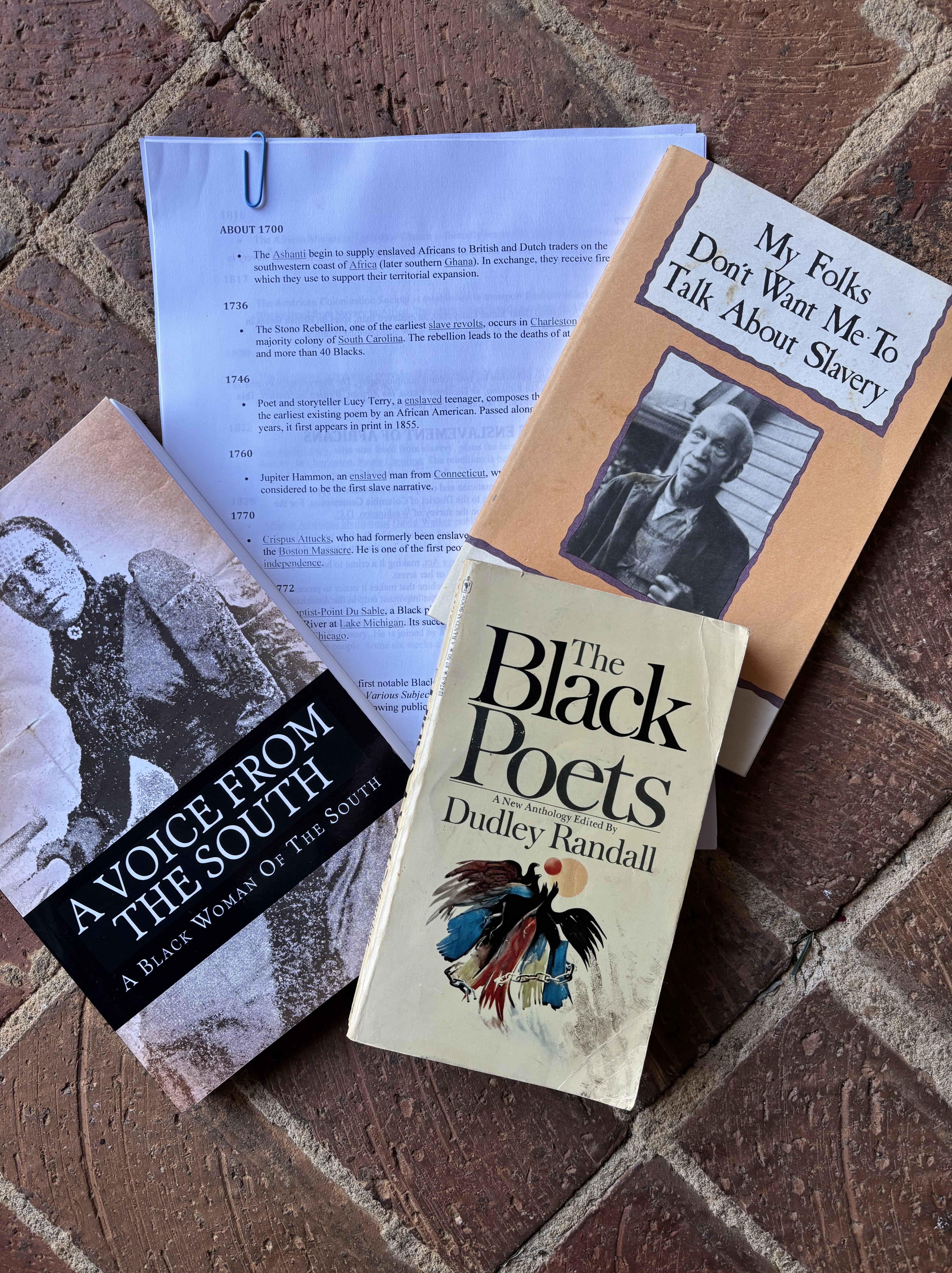
National Black History Month started this past Saturday. While I may scroll past some of the political stuff on FB, I don’t scroll past all the posts introducing me to Black men and women who made substantial contributions to America.
I was surprised to learn Black History Month was established as far back as 1970, years before I graduated from high school. Yet I don’t recall any kind of mention of it in any of my classes, my two younger sisters don’t either. We remember reading about Harriet Tubman, Sojourner Truth, Frederick Douglas, George Washington Carver, Dred Scott, Brown vs The Board of Education, and of course Rosa Parks and Martin Luther King, Jr. Maybe a few others, but the list tapers off between slavery and the Civil Rights Movement.
Years ago, 60 Minutes did a segment on the 1921 Tulsa Massacre. I was stunned–not just by the horrific 2-day violence, but also that I didn’t even know about the Greenwood District. As we were taught about the Gilded Age and the Progressive Era in our high school history classes, why didn’t we also learn about what was termed ‘Black Wall Street’ – a 40 square block of thriving black-owned homes, businesses, hospitals, and churches? I thought maybe it was just my hometown that skipped that nugget, but even in Oklahoma it wasn’t until 2020 the massacre was required reading in the school curriculum.
While working on this post, I did a simple timeline search of Black history and was saddened by how much I didn’t know. Our American story is filled with influential Black men and women in the fields of politics, science, literature, and religion that most of us have never heard about. Garret Morgan? Samuel David Ferguson? June Sadie Tanner Mosselle Alexander? Georgianna R. Simpson? There’s a reason why films like Hidden Figures, The Six Triple Eight, Till, and so many others are important and necessary.

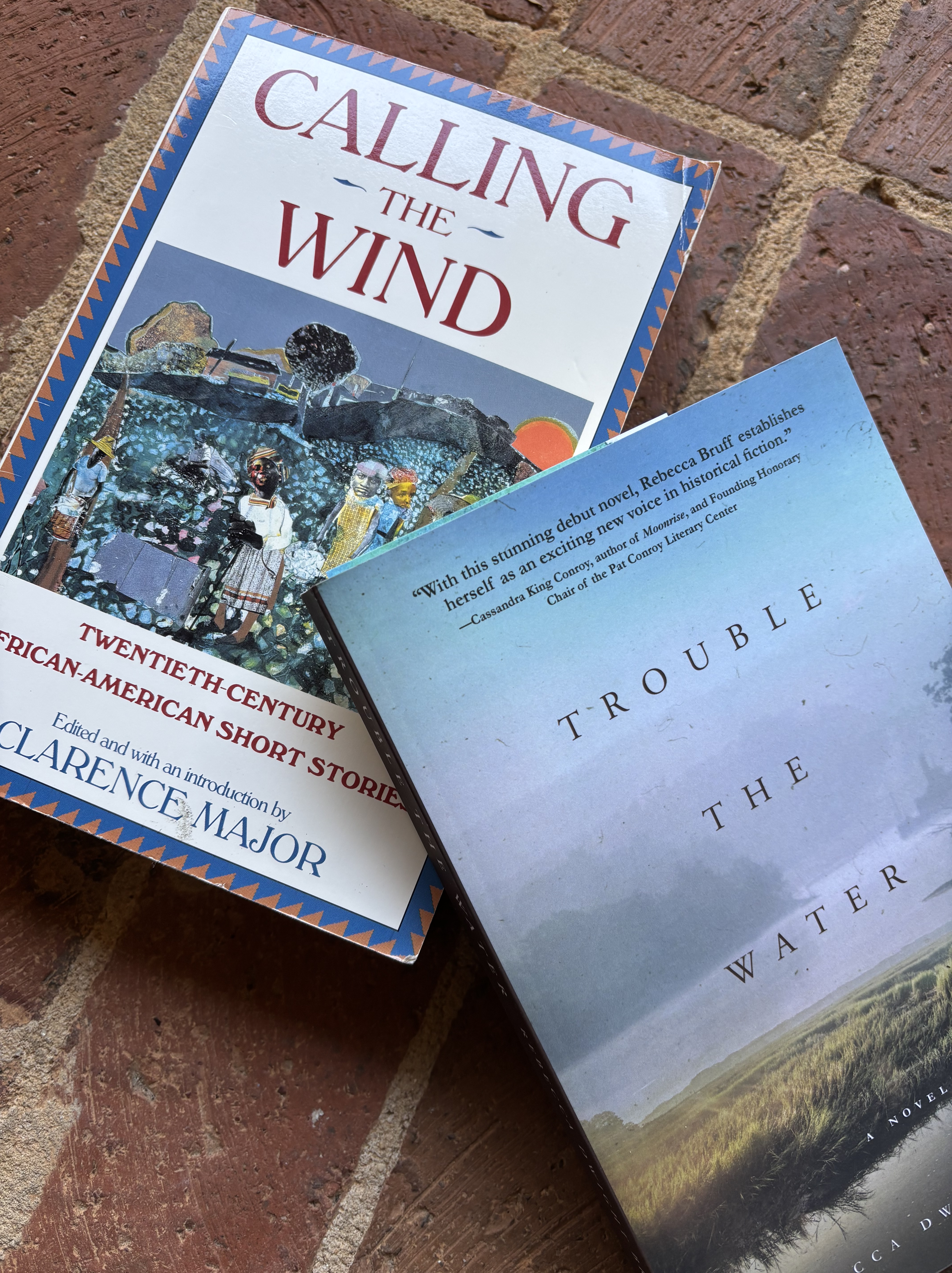
Last year I attended a book event by author Rebecca Dwight Bruff, who wrote Trouble the Water, a novel inspired by the life of Robert Smalls. Smalls was a slave and ‘… at the age of twelve, he’s sent to work in Charleston, where he loads ships and learns to pilot a cotton steamer. When the Civil War erupts and his cotton steamer becomes a confederate warship, Robert seizes the opportunity to pursue freedom for himself and the people he loves.’ (from Trouble the Water) Robert Smalls was a real person. Trouble the Water is the fictionalized version of his real story. In her blurb, Bruff writes that she heard the story of Robert Smalls on her first visit to South Carolina. She was so captivated that she left her job and moved across the country to research and write this novel.
During her presentation, she told us about another reading/book signing she did in another state further west. At that event she’d opened with the assumption that unless one lived in the Charleston area, you probably hadn’t heard of Smalls and his escapades. One Black woman raised her hand and said she knew about Smalls, not because she’d lived in Charleston, but because when she was in school, the schools were still segregated, and they were taught their Black history. When schools were integrated, their Black history wasn’t. This woman’s statement was an eye-opener to Bruff, and now to the rest of us, as to how much history had to have been lost in that historical moment of desegregation.
I still have the American History textbook I used homeschooling my son. It’s copyrighted 2003. Like most classrooms, we didn’t get through all the material either, but I was pleased to see so much Black History highlighted throughout the book. Yet I’m still hesitant to call it integrated. Much of the information is in a sidebar, or if part of the fuller narrative, it’s a sub-topic titled something like, ‘The African-American Experience’, so included, but still separated out. We still have a long way to go.
I understand the dilemma of not getting through all the material teachers would like to teach–the academic year seems to run out before we’ve barely opened our books and sharpened our pencils–but reading the brief bios about the accomplishments of lesser-known Black inventors, philanthropists, doctors, writers, etc. reminds me we still have much to learn.
Black History Month is a good place to start.
Oh! Susie King Taylor? The Women, a novel by Kristen Hannah, was published last year about the Army nurses during the Vietnam War. I wonder if those nurses knew that back in 1863 during the Civil War, Susie King Taylor was the first Black Army nurse in U.S history. Now you know.
My daffodils are inches tall, the trees are filled with bird song, my fingers are itching to play in the dirt–spring is coming. I hope you have a wonderful week, and you find moments of grace in your garden of daily life. See you next Monday!
 A Writer's Window