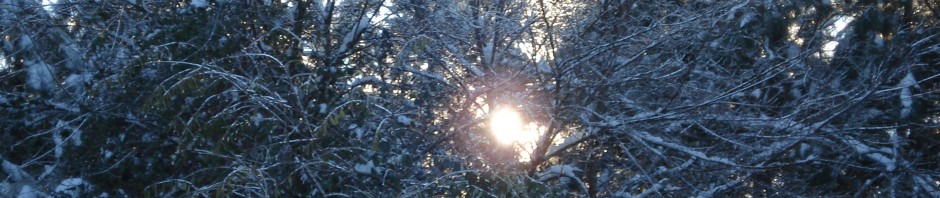
Happy Monday! The hummingbirds have moved on, and mums and pumpkins have appeared on my porch, so I guess Autumn has officially arrived. I hope you’re liking the change in the air and looking for the still subtle change in the leaf color. Hubby and I spent several days in my Ohio hometown last week and one afternoon we walked the tree-lined streets of my old neighborhood. I couldn’t keep from stopping and taking pics of fallen leaves in their new colors.


We also had about an hour to kill one evening before surprising our Grands (the look on their faces when I sidled up alongside them at a restaurant as they placed their supper order was the proverbial ‘priceless’), so when we pulled into a shopping center and saw this, I took it as a sign.
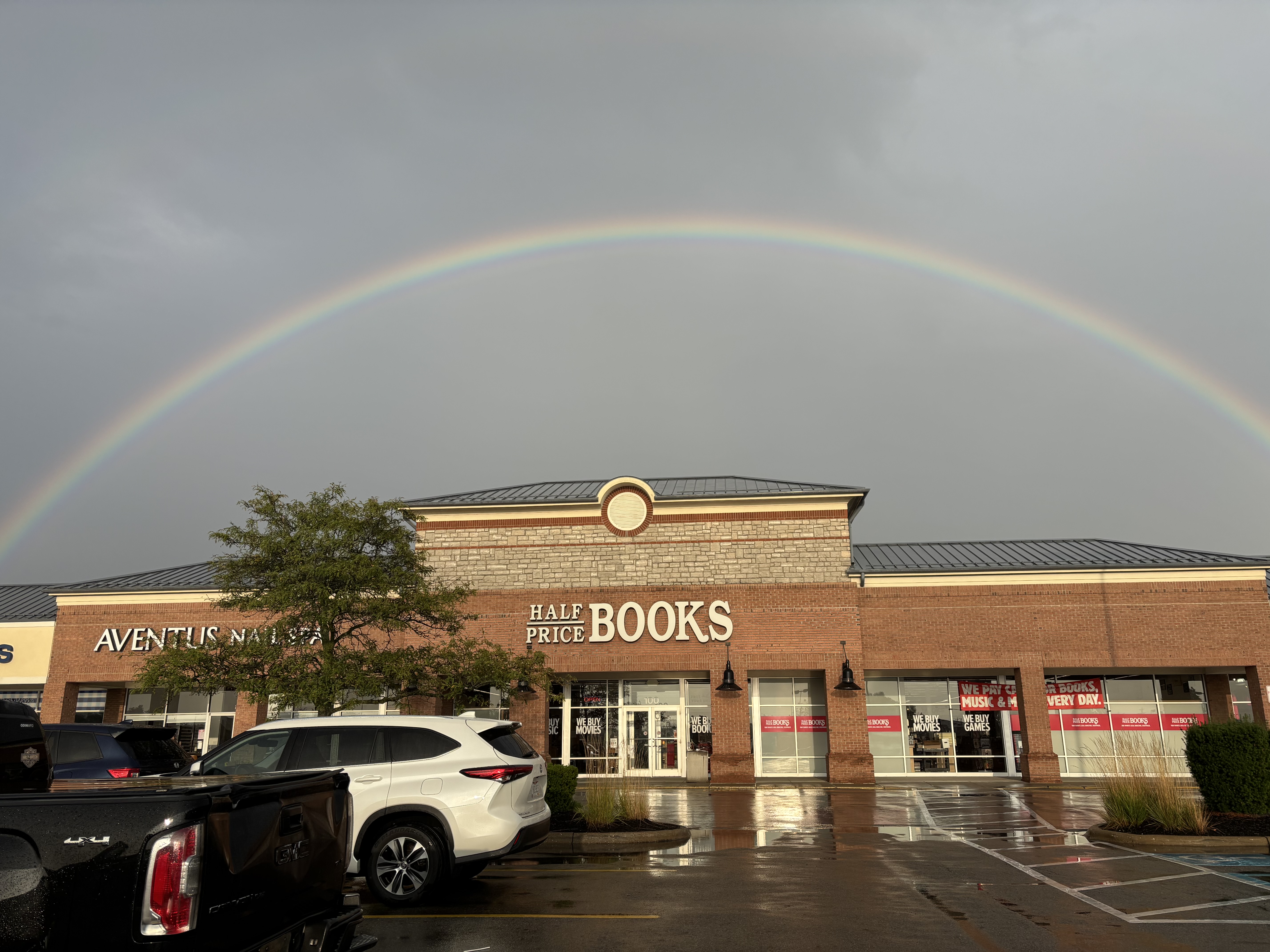
I mean, pots o’ gold can come in many forms, right?
At the front of the store was a display celebrating National Banned Books Week, which began yesterday and runs through Saturday. Here’s the banned book list Half Price Books put out:

The Absolutely True Diary of a Part-Time Indian by Sherman Alexie, The House of Spirits by Isabel Allende, I Know Why the Caged Bird Sings by Maya Angelou, The Handmaid’s Tale by Margaret Atwood, The House on Mango Street by Sandra Cisneros, The Diary of a Young Girl by Anne Frank, The 1619 Project by Nikole Hannah-Jones, All Boys Aren’t Blue by George M. Johnson, To Kill a Mockingbird by Harper Lee, Nineteen Minutes by Jodi Picoult, Harry Potter Series by J.K. Rowling, The Catcher in the Rye by J.D. Salinger, Sex is a Funny Word by Cory Silverman, Maus by Art Spiegleman, The Grapes of Wrath by John Steinbeck, The Lord of the Rings by J.R.R. Tolkien, The Adventures of Tom Sawyer by Mark Twain, The Color Purple by Alice Walker, The Glass Castle by Jeanette Walls, Charlotte’s Web by E. B. White, and Front Desk by Kelly Yang. (bolded titles are ones I’ve read)
Some of the books on the list were included in the display. It was weird seeing titles I’ve read and enjoyed–whether that enjoyment came from the content simply as story or because it made me think–stacked among them. Makes me want to reread them to see what horrible thing I obviously missed!
There were copies of books I’d used while homeschooling my children–Charlotte’s Web, The Giver by Lois Lowery and Lord of the Flies by William Golding. Neither of these last two books has been banned, but both are consistently challenged. My kids loved The Giver and we had some insightful discussions while we read it. Isn’t that the point?
I’m in the camp that believes it’s through reading these books that tackle tough subjects, we’re able to work through the tough emotions that come with them. Charlotte’s Web is a hard one to read to young children, but I found–and so did my daughter-in-law when she read it to my Grands–that talking about it helped the children develop deeper compassion.
I found it ironic that several of the historically banned or challenged books in the display were books I was assigned to read in school–Flowers for Algernon, Fahrenheit 451, Animal Farm, Diary of a Young Girl and 1984. It was because of class discussions I fell in love with the power of writing and reading. The power of words. (Thank you, Dave Spraw and Marilyn Stepro.)
The first time I saw the Lord of the Rings trilogy was in my high school’s student bookstore run by the student council … which had a faculty advisor. They encouraged us to read those books that broadened our world view.
My friend, author Kathie Giorgio, had donated copies of her books to her high school library. Several of them were used in literature classes. She was inducted into her school’s Hall of Fame because of her writing. Then someone new came into the system and decided her books were “inappropriate”–whatever that meant, Kathie never got a straight answer–and they were removed from the library and from the curriculum. It only takes one person to get things started. Kathie requested her name be removed from the Hall.
It saddens me students have to sneak or go rogue to find certain books, and you know they will, but it’s not just the school libraries that are being targeted with censorship. According to the American Library Association, 5,813 titles were challenged in public libraries and schools in 2024.
How did we return to a place where books instill fear instead of growth?
The trend I saw in the HPB display, and it’s backed by data, was many of the books challenged or banned are by Black, IPOC or LBGTQ+ authors and/or about that lived experience. I thought back to my high school experience of reading challenging books and having discussions, and wondered how many communities have Banned Book book clubs, like Park Road Books in Charlotte. Wondered how having those opportunities to read and discuss with members of those communities might open hearts and minds.
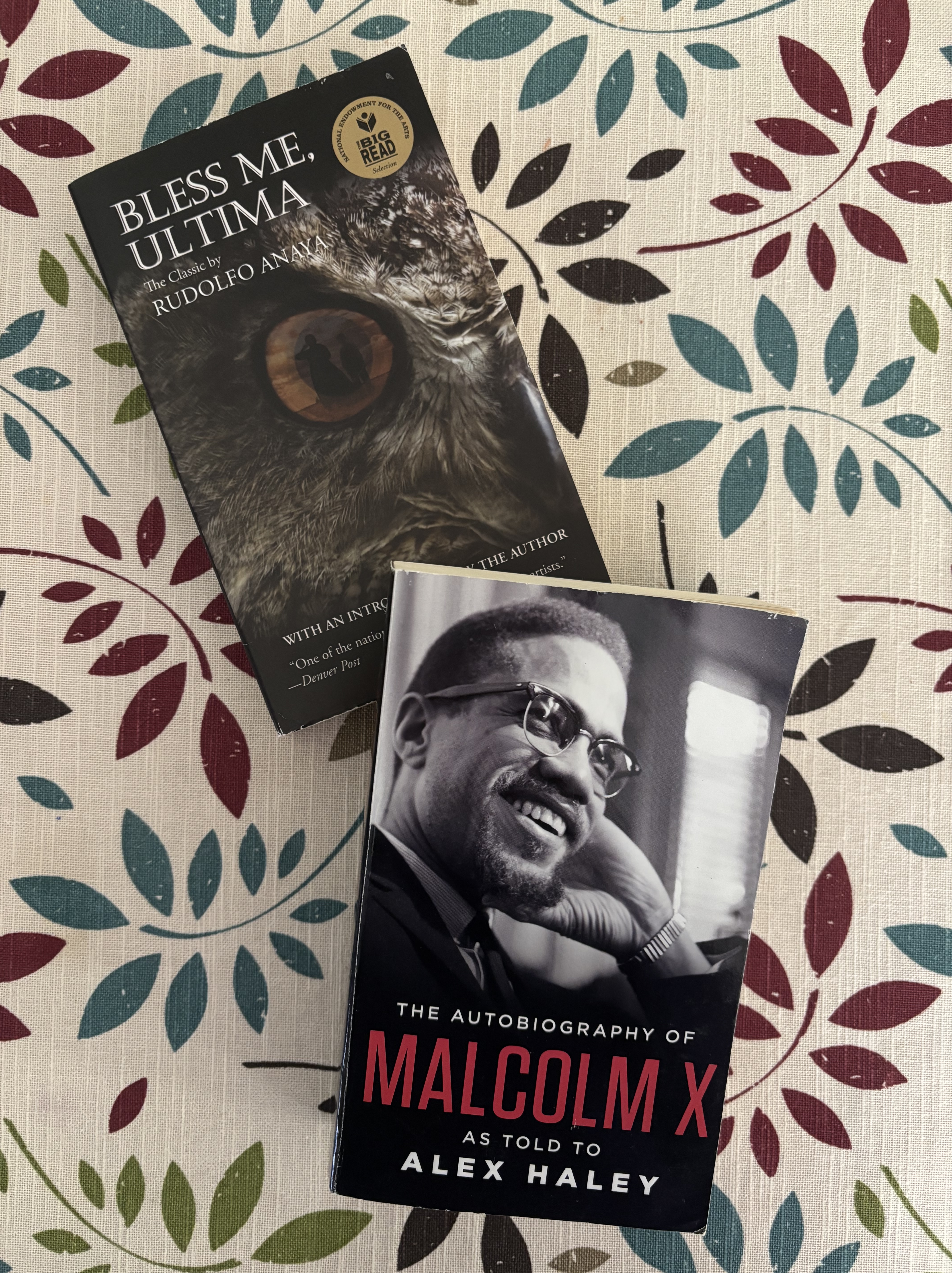
I have copies of some of the titles in the display, and even at a reduced price I couldn’t buy all the books I wanted so I picked two. They aren’t on the official HPB list, but both have been banned or challenged on others. Will you celebrate National Banned Book Week? If so, what will you read?
Next week’s post will be about some positive news in the world of the arts because there is that, too. I hope you have a great week, and I’ll see you at my window on Monday!
 A Writer's Window