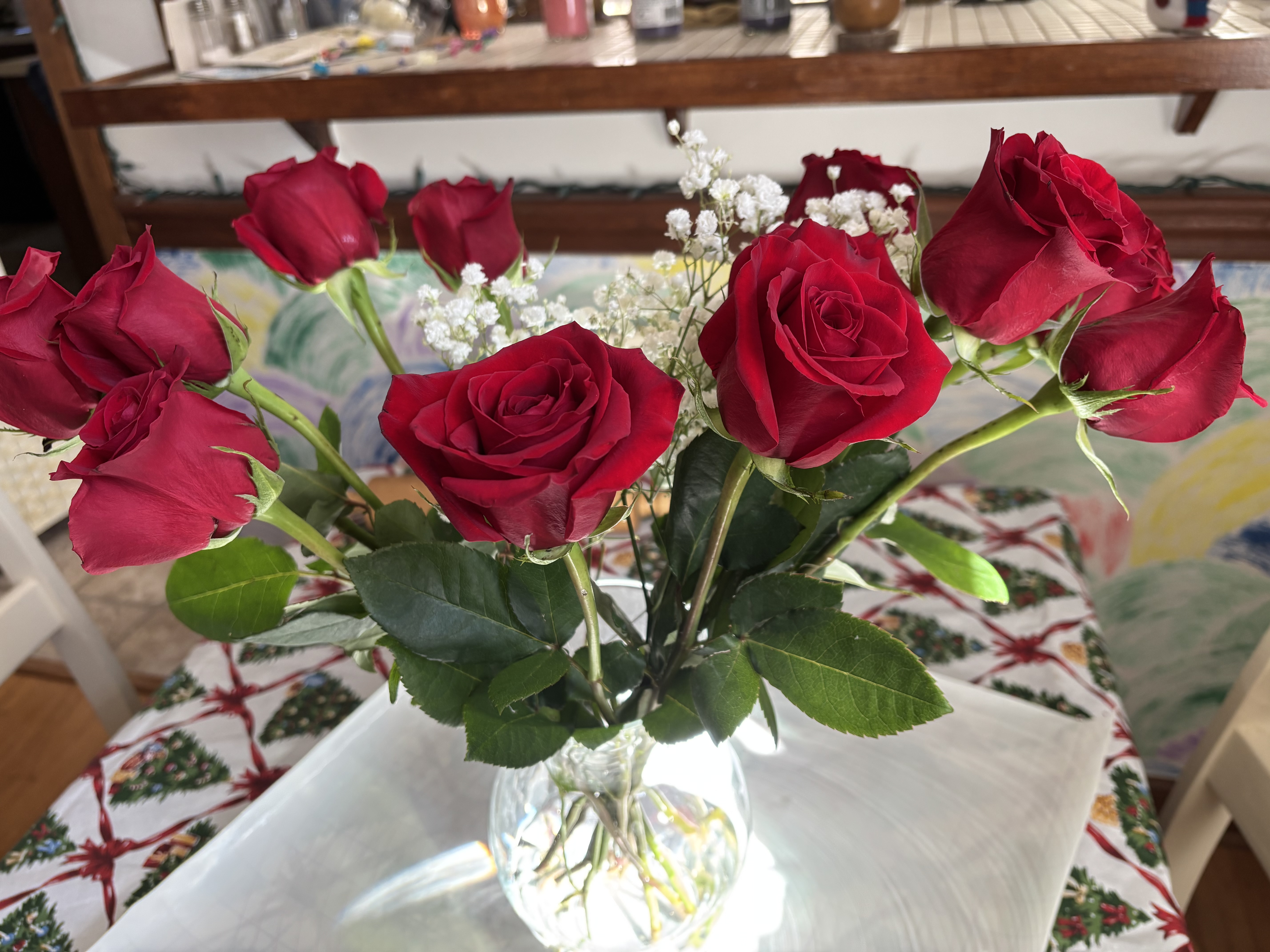
Happy Monday! I hope you had a lovely weekend. Valentine’s Day here was a walk on a new section of our local greenway and making Hubby some meatloaf and real mashed potatoes for supper. Love comes in all forms, doesn’t it. We also received some great news … but I can’t share it yet.
Last week in my list of writerly activities, I mentioned I’d taken on a new editing project. This poetry ‘…manuscript about a difficult subject, the war on Ukraine. As he’s [the poet] told me, it’s one thing to write about a war in the past; it’s another to write about it as it’s happening. He’s rightly concerned about being ‘a voice’ when he has no right or permission to speak for a another’s life.’
This brings up a topic I’ve written about before, the ‘I’ in a poem. Someone recently told me that when we read novels and the narrator is in first person, no one assumes the author is the ‘I’ in the story. Yet in poetry it’s almost always the opposite; people quite often believe the poem is a first-hand account.
My friend Julie has a great poem about the ‘I’ in a poem, that sometimes it’s the poet … and sometimes it’s not. And the reader can’t or shouldn’t assume it is.
A couple years ago I read my poem, Bravery, at my Table Rock Writers open mic. In the poem a mom watches her draft-age son watch the draft drawing for the Vietnam War. It’s an ‘I’ poem. After the open mic one of the other attendees came to me and remarked I didn’t look old enough to have a son that age. I was relieved because I’m not! But I am a mom of four boys and one did serve in the Air Force, so it wasn’t much of a leap to imagine being a mom 50 some years ago, being in that situation with those fears.
I may have mentioned another poem of mine, Legends, about finding an old photo in a maiden aunt’s Bible after her death. The photo–which is real–is of a cemetery gate with ‘x’s marking headstones and identifying them in the margin. The poem asks, who were these people and why was the photo tucked in the Bible? It’s another ‘I’ poem, but the story in the poem is made up. After reading the poem in critique group a few members encouraged me to go on family history sites and research who these ‘relatives’ might be. I felt bad saying I really didn’t need to or care to because those people weren’t my family. I wasn’t the ‘I’ in the poem. But I do have an interest in my family history and I have all the genealogical information my grandma researched years ago, so it wasn’t much of a leap to question what it’d be like to have unanswered questions about ancestors.
Which brings me to my friend’s manuscript and his concern about being the ‘I’ in some of the poems. If he’s never been to Ukraine, how can he possibly write about it?
Cultural appropriation or misappropriation is a real thing, it’s defined as adopting the fashion, iconography, trends or styles from a culture not one’s own. That was one part of his concern, would his poetry be appropriating their culture. His poetry doesn’t fall into that category.
But what about taking on another’s persona? Can he ‘pretend’ he’s a citizen of Ukraine and speak authentically? In his case, most of his poems are in response to articles and first-hand accounts of events and situations from the war. He’s not making up or rewriting history. As a caring human being, it’s not much of a leap for him to respond to children’s hospitals being shelled, families losing loved ones, citizens being angry or fearful of what’s happening. These are universal truths, and slipping into an ‘I’ poem simply makes those responses, those emotions, more honest.
My friend had conversations with a poet from Ukraine who is currently living out of their homeland, who has encouraged him to write these poems. They’ve told him there are times when they know Ukrainian voices are being silenced.
So, it’s not that Ukrainians don’t have a voice of their own, it’s that they aren’t allowed to use it. This opens the door for my friend to use his.
As I write this, I think of others whose voices are being silenced and who could use someone to speak for and with them. I admire my friend for taking on the challenge of being a voice.
I believe that’s why poetry is important, maybe even more so now. Maybe by looking at universal truths through ‘I’ poetry it will shorten the leap between ‘them’ and ‘us.’
So next time you read an ‘I’ poem and wonder if it’s the poet’s ‘true’ story, ultimately does it matter, as long as you were impacted by it.
Ash Wednesday is this week, so for those who observe the season of Lent, may the journey through the desert bear good fruit. For all of you, I hope you have a good week with plenty of sunshine after snow and rain! I’ll see you next Monday.
 A Writer's Window